Best Spanish Books for Kids: 7 Bilingual Books and Activities for Summer Learning
Looking for Spanish books for kids this summer?
Whether you're raising a bilingual child, homeschooling, planning a family trip, or simply looking for educational summer activities, books are one of the easiest ways to introduce a new language. In this guide, you'll discover Spanish and bilingual children's books that combine storytelling, creativity, and hands-on activities to make learning Spanish fun for young readers.
Summer is the perfect time to explore a new language.
Without homework, tests, or classroom pressure, children can learn naturally through stories, games, and creative summer learning activities. A few Spanish words learned during a favorite story often stay with a child far longer than vocabulary memorized from a worksheet.
This collection of books offers a wonderful opportunity to introduce Spanish through adventures, friendship, emotions, culture, and imaginative play. To make learning even more engaging, I've paired each book with a simple language-building activity that children can enjoy at home during summer break.
Whether your child is just beginning to hear Spanish or already knows a few words, these books can help turn summer reading into a fun language-learning adventure.
Want to Build Your Own Summer Spanish Reading Basket?
The books featured in this guide can be enjoyed individually or combined into a Summer Spanish Reading Basket—a collection of Spanish and bilingual books that helps children build vocabulary through stories, creativity, and everyday play.
I've created an Amazon list featuring all of the books included in this article, making it easy for families to browse, compare, and build a personalized Spanish-learning library for summer.
Whether you choose one title or several, these books offer a wonderful mix of adventure, friendship, creativity, family stories, and bilingual learning opportunities.
👉 View the complete Summer Spanish Reading Basket Here.
Quick Guide: Which Spanish Book Is Right for Your Child?
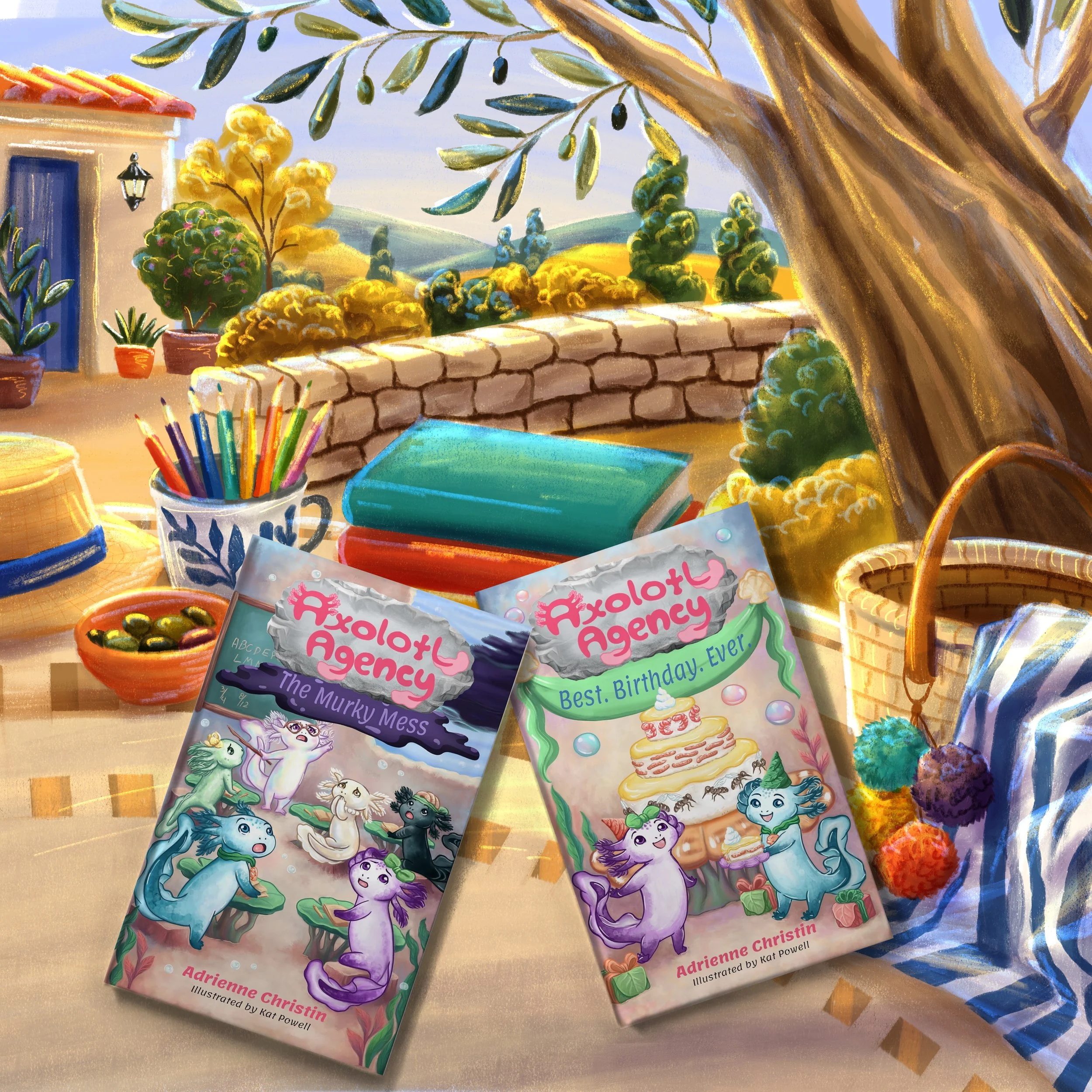
For children who love adventures and mysteries (Ages 5–10)
Axolot Agency Series by Adrienne Christin
Focus: Adventure, Mexican culture, and geography
Language Skill: Learning vocabulary through context
Bonus: Free printable activity sheets
Perfect for: Curious readers who enjoy mysteries and exploration
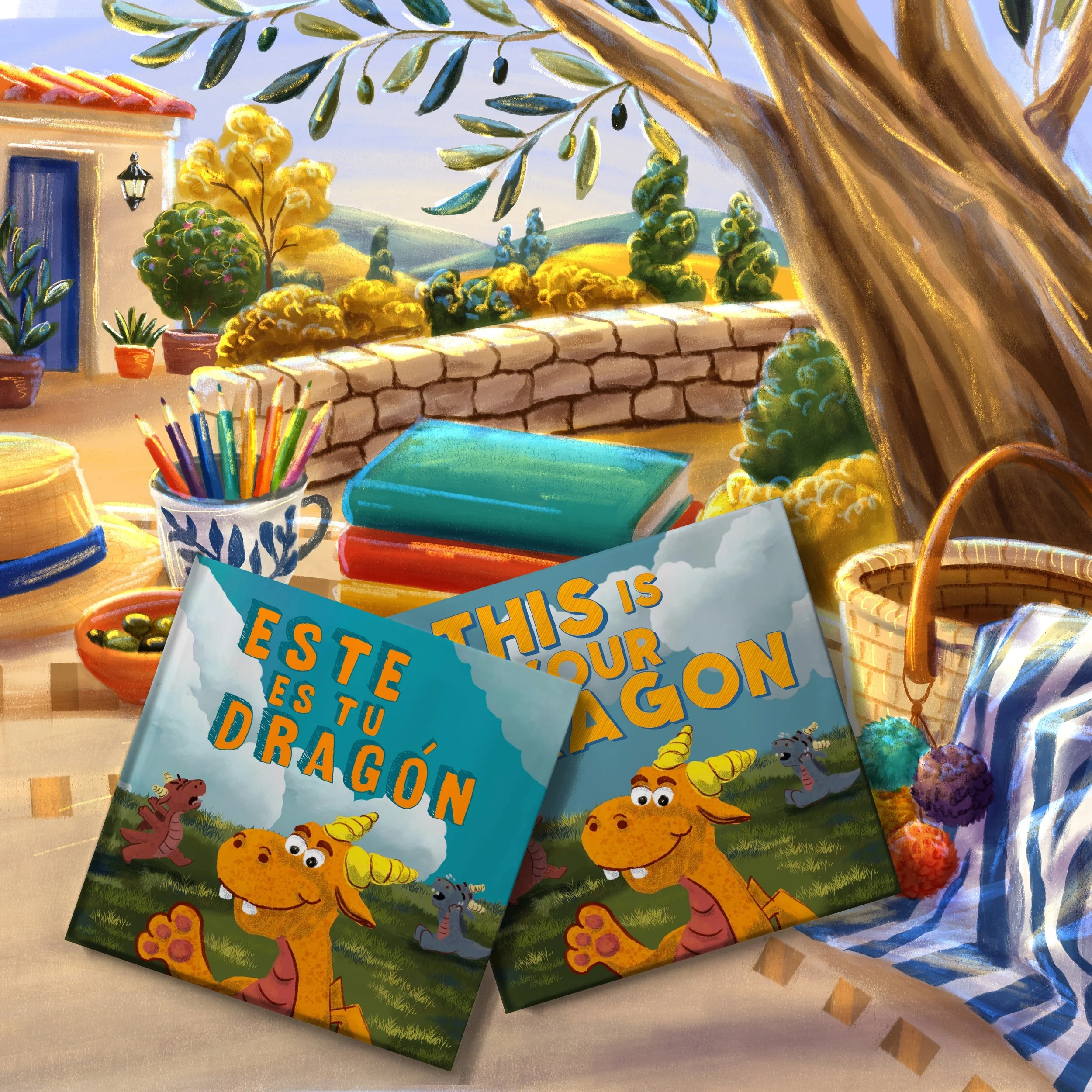
For young dragon lovers and beginner Spanish learners (Ages 3–7)
Este es tu dragón by Jessica Kaschube
Focus: Emotions and imaginative play
Language Skill: Repetition and everyday vocabulary
Bonus: Available in both English and Spanish
Perfect for: Preschoolers and children new to Spanish
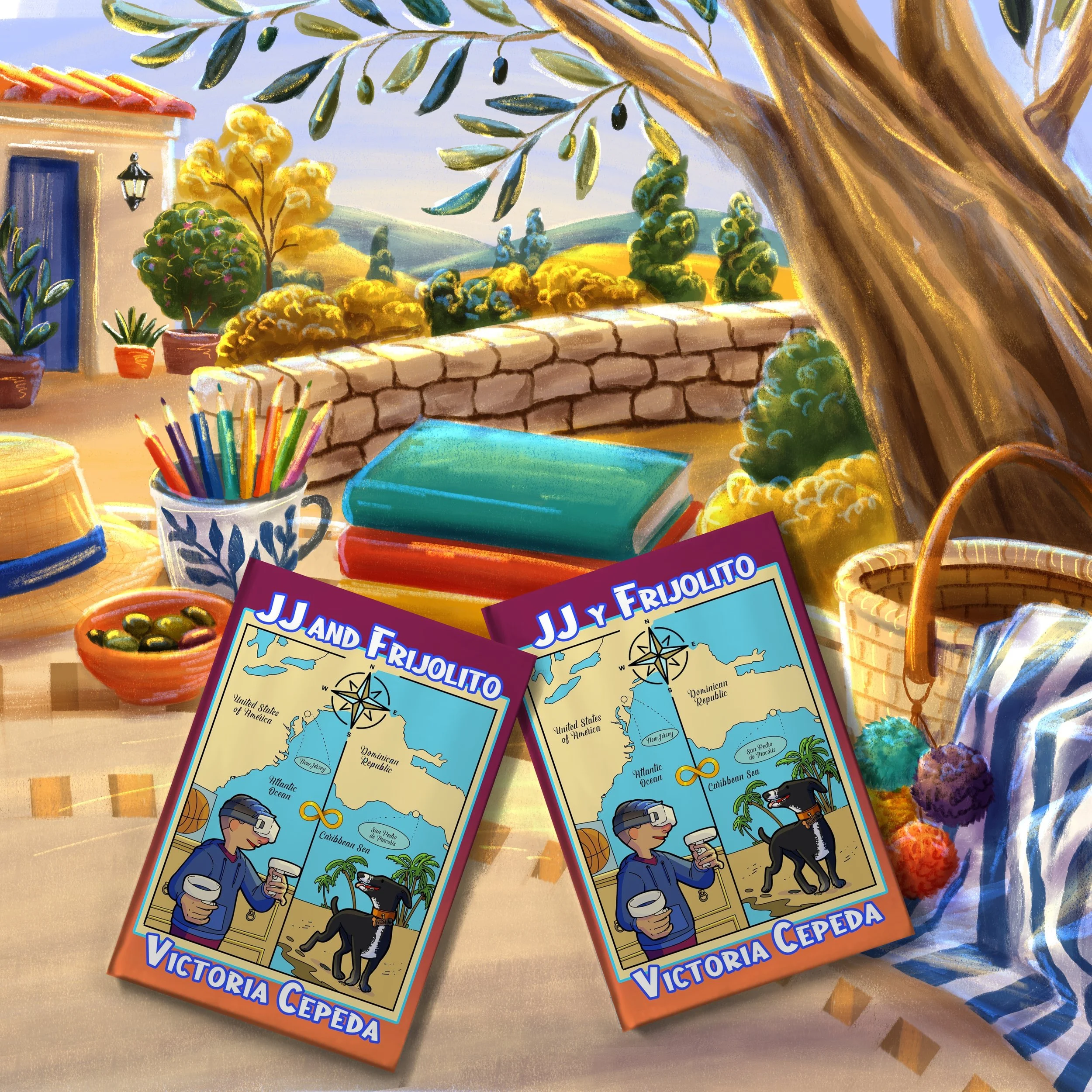
For children learning about friendship and inclusion (Ages 5–10)
JJ y Frijolito by Victoria Cepeda
Focus: Friendship, empathy, and neurodiversity
Language Skill: Social and emotional vocabulary
Bonus: Great conversation starter for families
Perfect for: Children who enjoy character-driven stories
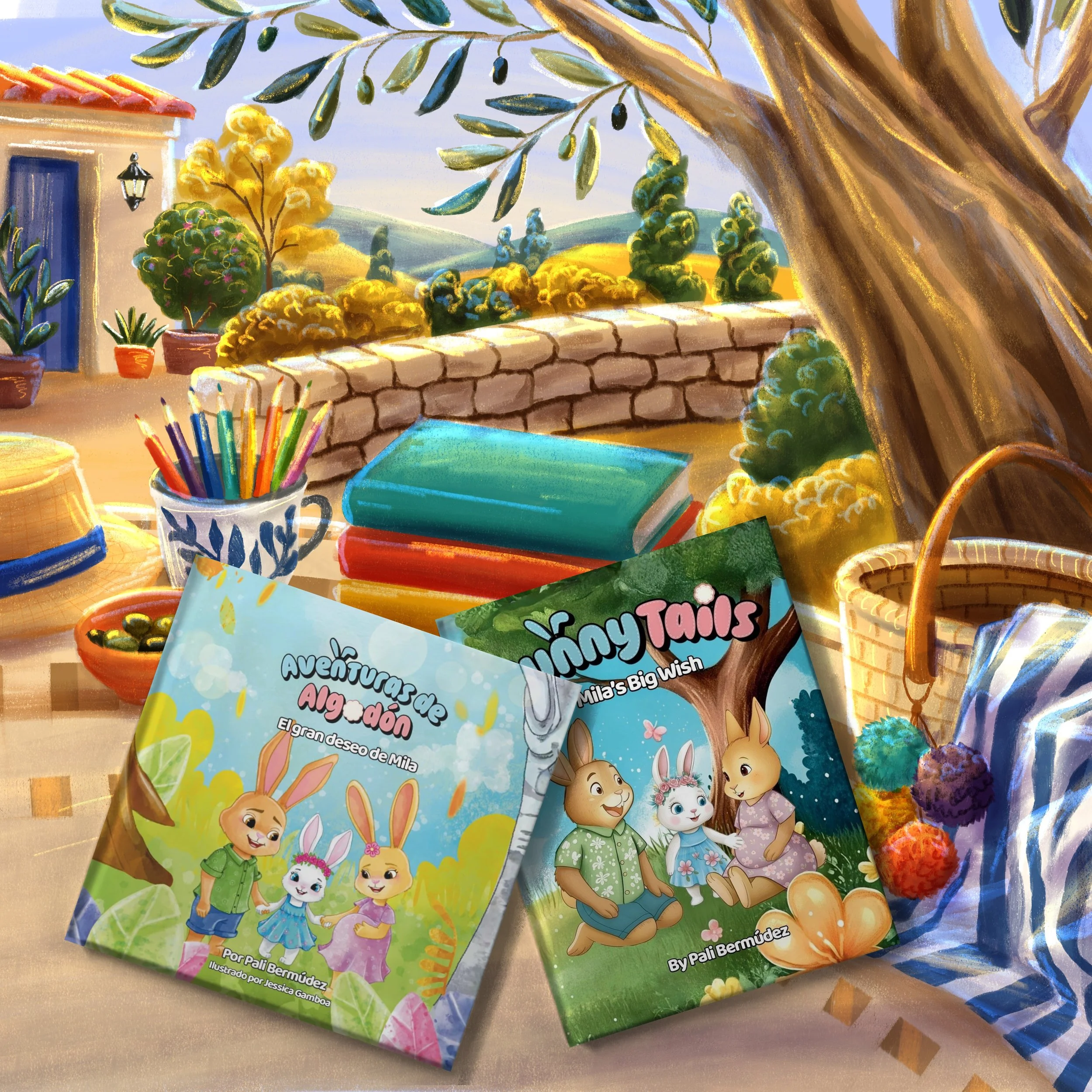
For families expecting a new sibling or discussing family changes (Ages 3–8)
Aventuras de Algodón: El gran deseo de Mila by Pali Bermúdez
Focus: Family, emotions, and growing relationships
Language Skill: Family-related vocabulary
Bonus: Available in both English and Spanish
Perfect for: Young children navigating changes at home
For creative thinkers and active learners (Ages 4–10)
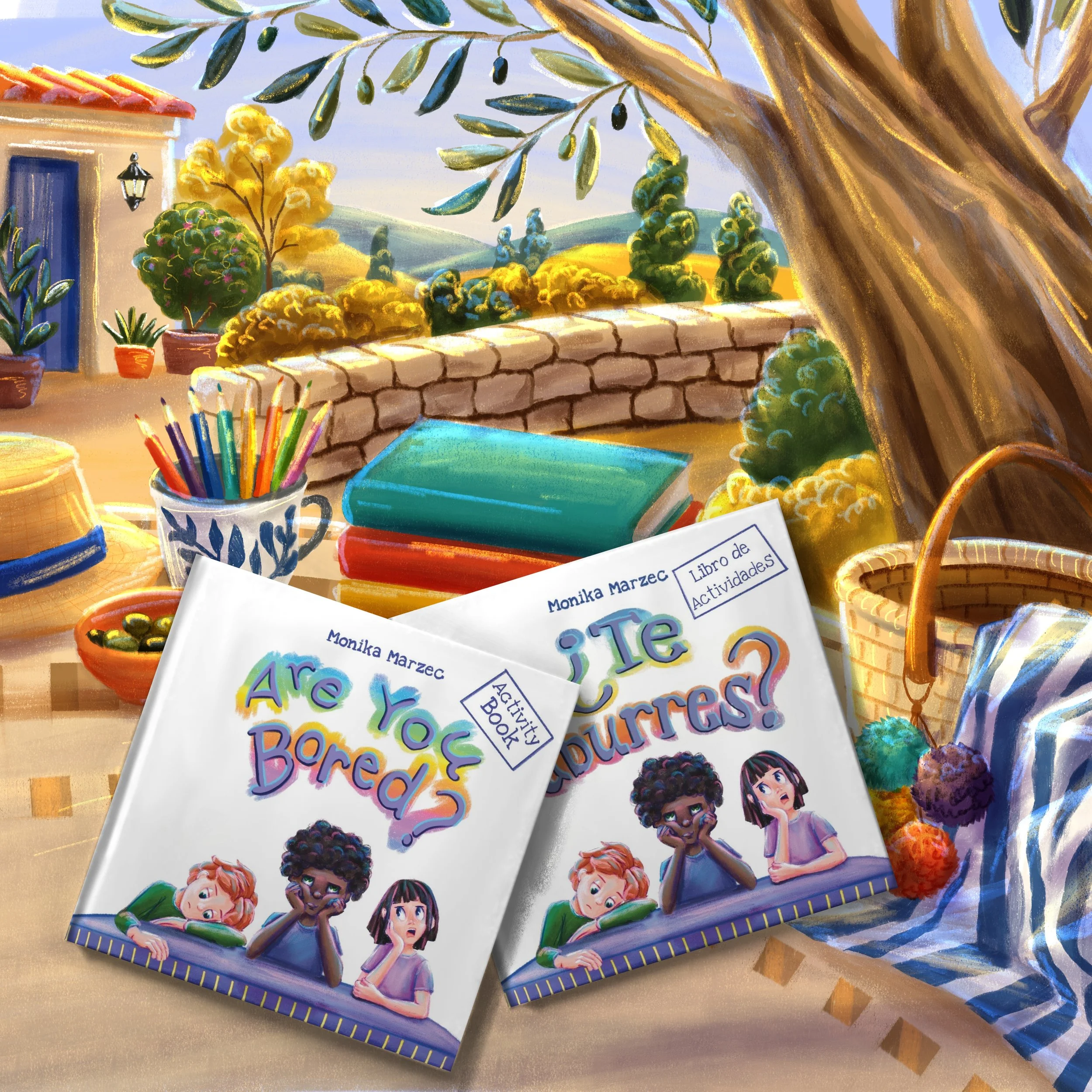
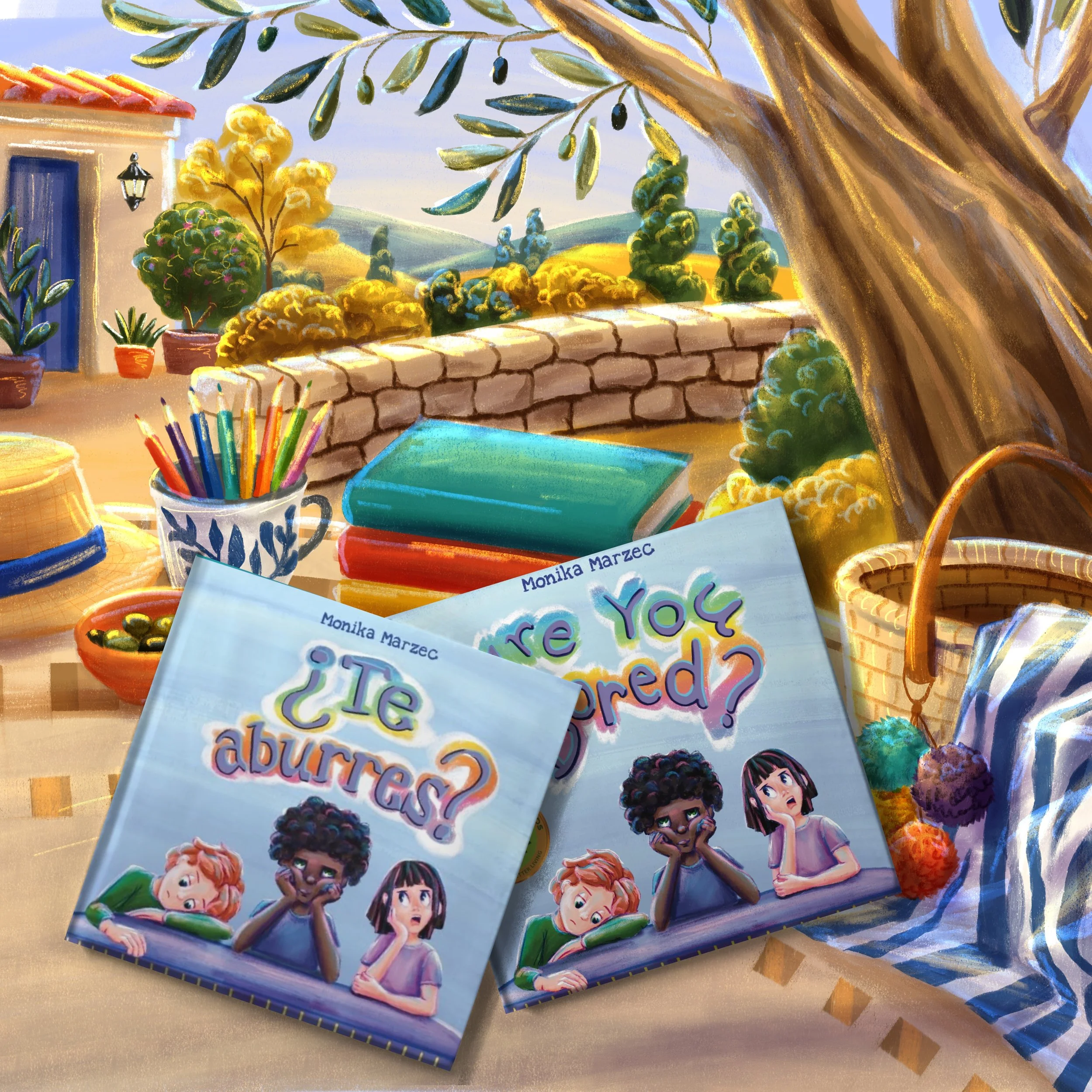
¿Te aburres? and ¿Te aburres? Activity Book by Monika Marzec
Focus: Creativity, imagination, and problem-solving
Language Skill: Vocabulary practice through activities
Bonus: Available in English and Spanish for easy comparison
Perfect for: Families looking for hands-on language learning
For children ready for longer stories (Ages 6–10)
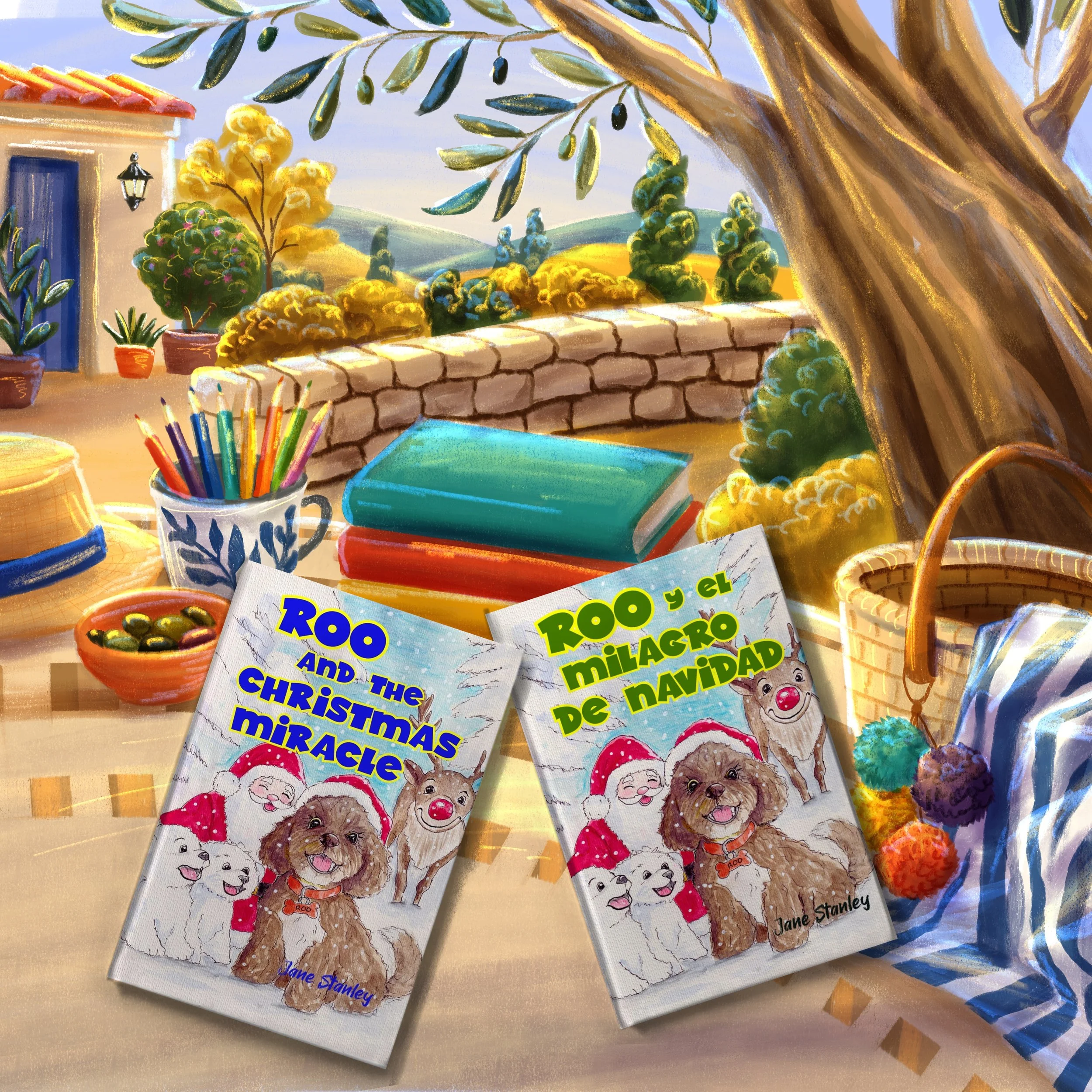
Roo y el Milagro de Navidad by Jane Stanley
Focus: Kindness, hope, and storytelling
Language Skill: Building reading confidence
Bonus: A fun "Christmas in July" read
Perfect for: Children who already know some basic Spanish words
Axolot Agency Series by Adrienne Christin
If you're looking for a fun way to introduce Spanish while exploring a different culture this summer, the Axolot Agency series is a fantastic place to start.
Set in the colorful waterways of Xochimilco, Mexico, these adventure stories follow a team of young axolotl detectives as they solve mysteries and help their community. Along the way, children are naturally exposed to Spanish words, cultural traditions, and fascinating facts about one of Mexico's most unique environments.
What makes these books especially valuable for families is that the Spanish vocabulary feels like part of the adventure rather than a lesson. Children encounter new words in context, making them easier to remember and more meaningful than isolated vocabulary lists. The stories also spark curiosity about Mexican culture, wildlife, and geography, turning reading time into a mini cultural journey.
For summer learning, I recommend reading both books in the series. Together, they provide several opportunities to revisit vocabulary, strengthen comprehension, and build confidence with Spanish words through repetition and storytelling.
The series also includes free printable activity sheets that make it easy for parents to extend the learning experience without any preparation. Even if you don't speak Spanish yourself, you can enjoy the summer learning activities alongside your child and learn together.
Bilingual Activity: Axolotl Detective Treasure Hunt
Perfect for ages 5–10
After reading the story, choose several words that appear in the book or activity sheets.
Examples:
agua — water
flor — flower
amigo — friend
canal — canal
axolote — axolotl
hoja — leaf
pez — fish
Write each Spanish word on a small card.
Ask your child to:
Find the object around the house, outside, or in a picture.
Say the Spanish word aloud.
Say the English translation.
Draw the object in a detective notebook.
For an extra challenge, ask:
"Can you use both words in a sentence?"
Example:
"I found agua. Agua means water."
This activity takes only 10–15 minutes and requires no Spanish knowledge from parents.
Creative Activity: Design Your Own Xochimilco Canal
Using inspiration from the books, invite children to create their own floating garden scene.
They can draw:
an axolotl
flowers (flores)
water (agua)
fish (peces)
boats (barcos)
leaves (hojas)
When the picture is finished, label each item in both languages.
Example:
agua / water
flor / flower
pez / fish
The finished artwork becomes a personalized Spanish vocabulary poster that children can display all summer long.
Parent Tip: Don't worry about pronunciation or knowing every word. The goal isn't fluency—it's exposure. If your child hears, says, draws, and uses a few Spanish words each week, they're already building a foundation for future language learning.
You Don't Need to Speak Spanish to Make This Activity Meaningful
✓ Takes less than 15 minutes to set up
✓ No Spanish knowledge required
✓ Reinforces vocabulary through play
✓ Combines reading, art, and language learning
✓ Encourages curiosity about Mexican culture
For families creating a Spanish and bilingual summer reading basket, the Axolot Agency books are an excellent choice because they combine adventure, culture, and language in a way that feels completely natural and enjoyable.
Best. Birthday. Ever. (Axolotl Agency) by Adrienne Christin (Author), Kat Powell (Illustrator)
The Murky Mess (Axolotl Agency) by Adrienne Christin (Author), Kat Powell (Illustrator)
Este es tu dragón
by Jessica Kaschube
For many parents, the hardest part of introducing a new language is knowing where to begin. Este es tu dragón is a wonderful starting point because it combines simple language, engaging illustrations, and a playful story that invites children to participate rather than simply listen.
What makes this book especially appealing for summer learning is its focus on repetition. Children naturally learn new words when they hear them multiple times in a meaningful context, and this story provides plenty of opportunities to do just that. Rather than feeling like a language lesson, the book feels like a conversation with a friendly dragon, making it accessible even for children who have never been exposed to Spanish before.
Families also have the option of reading the book in English or Spanish, making it easy to adapt to different comfort levels. Parents who don't speak Spanish can begin with the English version and gradually introduce Spanish vocabulary, while more confident learners can explore the Spanish edition directly. The availability of a Kindle edition also makes it an affordable addition to a summer reading collection, whether you're at home, traveling, or looking for screen-friendly reading options on the go.
Young children are naturally drawn to dragons, imagination, and pretend play, which makes this book an ideal springboard for language-building activities that feel like games rather than schoolwork.
Bilingual Activity: Dragon Feelings Adventure
Perfect for ages 3–7
After reading the story, introduce a few simple emotion words in both English and Spanish.
Examples:
SpanishEnglishfelizhappytristesademocionadoexcitedcansadotiredtranquilocalmvalientebrave
Say a word and invite your child to act it out like a dragon.
For example:
"Can you show me a dragón feliz (happy dragon)?"
"What would a dragón cansado (tired dragon) look like?"
"What sound would a dragón emocionado (excited dragon) make?"
Children love the movement and imagination involved, and they begin connecting Spanish vocabulary with emotions they already understand.
For older children, turn it into a guessing game where one person acts out an emotion and the others identify it in both languages.
Creative Activity: Design Your Own Dragon
Invite your child to create a dragon of their own using crayons, markers, paint, or collage materials.
Once the dragon is finished, label its features in both English and Spanish.
Examples:
eyes — ojos
wings — alas
tail — cola
claws — garras
scales — escamas
fire — fuego
Then ask your child:
What is your dragon's name?
What is your dragon's favorite color?
How does your dragon feel today?
Encourage them to answer using a mix of English and Spanish words.
For example:
"My dragon is feliz."
"His favorite color is azul."
The activity can be completed in 15–20 minutes and requires no special preparation, making it perfect for a quiet summer afternoon.
Learning Through Imagination
Young children learn best when language is connected to play, movement, and creativity. Este es tu dragón creates exactly that kind of experience. Instead of focusing on memorizing vocabulary, children build confidence by using new words while drawing, pretending, and storytelling.
For families creating a bilingual summer reading basket, this book is an excellent early-language choice. Its simple vocabulary, bilingual availability, and imaginative theme make it especially welcoming for beginners and for parents who are learning alongside their children.
Este es tu dragón (This is Your Dragon) (Spanish Edition)
Spanish Edition by Jessica Kaschube (Author), Amanda Herskind-Dumke (Illustrator)
This is Your Dragon
by Jessica Kaschube (Author), Amanda Herskind-Dumke (Illustrator)
JJ y Frijolito
by Victoria Cepeda
Summer is a wonderful time to help children explore not only a new language but also new ways of understanding the people around them. JJ y Frijolito does both beautifully.
This heartwarming story celebrates friendship, empathy, and inclusion while introducing children to Spanish in a natural and engaging way. Through JJ's relationship with Frijolito, young readers are encouraged to think about kindness, communication, and the many ways people experience the world. The book offers an important opportunity for families to discuss neurodiversity while building language skills through storytelling.
One of the strengths of JJ y Frijolito is that it presents meaningful themes in a way children can understand. Rather than focusing solely on vocabulary, the story encourages conversations about being a good friend, noticing others' feelings, and appreciating differences. These discussions create memorable connections that help new words stick.
The book also works especially well as part of a summer Spanish immersion routine at home because it naturally lends itself to interactive activities. Children can use the story as inspiration for drawing, role-playing, and talking about friendship while practicing simple Spanish words and phrases.
Bilingual Activity: Friendship Word Detectives
Perfect for ages 5–10
After reading the story, introduce a collection of friendship-related words in both Spanish and English.
Examples:
SpanishEnglishamigofriendayudarhelpcompartirshareescucharlistenjugarplayamablekindfelizhappyjuntostogether
Write each Spanish word on a card.
Invite your child to become a "Friendship Detective."
Throughout the day, whenever they notice someone showing one of these qualities, they can match the action to the vocabulary card.
For example:
Helping set the table = ayudar (help)
Sharing a toy = compartir (share)
Playing a game together = jugar (play)
At the end of the day, review the cards together and talk about the examples they found.
This activity helps children connect new vocabulary to real-life experiences, making the words more meaningful and easier to remember.
Creative Activity: Friendship Portrait Gallery
Invite your child to create a portrait gallery featuring themselves, a friend, family member, or favorite character from the story.
Under each picture, add simple bilingual labels.
Examples:
amigo / friend
feliz / happy
amable / kind
juntos / together
For older children, encourage them to write one short sentence describing each person.
Examples:
Mi amigo es amable. (My friend is kind.)
Jugamos juntos. (We play together.)
The portraits can be displayed on a wall, refrigerator, or bulletin board to create a growing collection of Spanish vocabulary throughout the summer.
Learning Language Through Kindness and Connection
Children remember words best when those words are connected to feelings, experiences, and relationships. JJ y Frijolito offers exactly that kind of learning experience. The story encourages children to notice acts of kindness, think about friendship, and celebrate differences while naturally encountering new Spanish vocabulary.
Perhaps most importantly, parents don't need to speak Spanish to make this activity meaningful. By reading together, talking about the story, and practicing a few simple words, families can create valuable language-learning moments that feel more like connection than instruction.
For families building a summer Spanish reading basket, JJ y Frijolito adds something special to the collection: a story that nurtures empathy and understanding while helping children grow their confidence with a new language.
JJ and Frijolito
by Victoria Cepeda (Author), Victoria Cepeda (Author), Dustin Hansen (Illustrator)
JJ y Frijolito (Spanish Edition)
by Victoria Cepeda (Author), Victoria Cepeda (Author), Dustin Hansen (Illustrator)
Aventuras de Algodón: El gran deseo de Mila
by Pali Bermúdez, illustrated by Jessica Gamboa
Starting a new language can feel overwhelming for young children, which is why stories connected to familiar emotions and family experiences are often the most effective learning tools. Aventuras de Algodón: El gran deseo de Mila does exactly that.
This gentle picture book follows Mila, a young bunny who is preparing for a big change in her family: becoming a big sister. As Mila navigates feelings of excitement, uncertainty, and love, children are introduced to vocabulary connected to family, emotions, and relationships in a meaningful context. The story is designed for children ages 2–7 and supports social-emotional learning while encouraging conversations about change, belonging, and growing families.
One of the strengths of this title for summer language learning is that it is also available in English as Bunny Tails: Mila's Big Wish. Families can read both versions side by side, allowing children to compare words, recognize familiar story elements, and gradually build confidence in Spanish. Because the story is already understood in one language, children can focus on discovering new vocabulary in the other.
The book's themes also make it perfect for family reading time. Whether a child is expecting a sibling, adjusting to a family change, or simply learning about empathy and love, Mila's story opens the door to meaningful conversations while naturally introducing Spanish vocabulary.
Bilingual Activity: Mila's Family Tree
Perfect for ages 3–8
After reading the story, invite your child to create a family tree inspired by Mila's family.
Start with a simple vocabulary list:
EnglishSpanishfamilyfamiliamommamádadpapásisterhermanabrotherhermanobabybebéloveamorbunnyconejito
Draw a large tree or bunny burrow on a sheet of paper.
Ask your child to add family members and label them using both English and Spanish.
For younger children:
Color the family members.
Match words to pictures.
Practice saying the words aloud.
For older children:
Write simple sentences.
Compare English and Spanish words.
Add extended family members.
Examples:
Mi mamá me quiere.
(My mom loves me.)
Tengo una hermana.
(I have a sister.)
This activity helps children connect new vocabulary to the people they know best, making language learning personal and memorable.
Creative Activity: Mila's Big Wish Balloon
Mila spends much of the story thinking about change, hopes, and growing love within her family. Invite children to imagine their own "big wish."
Draw a large balloon, cloud, or heart on a piece of paper.
Inside it, ask children to draw:
something they hope for,
something they love,
or something they are excited about this summer.
Around the picture, add bilingual vocabulary from the story:
❤️ amor — love
👨👩👧 familia — family
😊 feliz — happy
👶 bebé — baby
🐰 conejito — bunny
⭐ deseo — wish
For older children, encourage them to write:
My big wish is...
Mi gran deseo es...
The finished artwork becomes both a language-learning activity and a keepsake that captures a child's thoughts and feelings.
Learning Language Through Family Stories
Children often learn new words most easily when those words are connected to emotions and experiences they understand. By exploring family relationships, wishes, and growing love, Aventuras de Algodón: El gran deseo de Mila creates meaningful opportunities for bilingual learning.
Parents don't need to speak Spanish fluently to enjoy the experience. Simply reading the English and Spanish editions side by side, discussing Mila's feelings, and completing a simple family-centered activity can help children build vocabulary while strengthening family connections.
For families creating a summer Spanish reading basket, Mila's story offers a gentle introduction to bilingual learning through one of the topics children care about most: the people they love.
Aventuras de Algodón: El gran deseo de Mila (Spanish Edition)
Spanish Edition by Pali Bermúdez (Author), Jessica Gamboa (Illustrator)
Bunny Tails: Mila's Big Wish: A story about family, change, and growing love.
by Pali Bermúdez (Author), Maria Paula Bermúdez Quintana (Author)
¿Te aburres? and ¿Te aburres? Activity Book
by Monika Marzec
One of the most effective ways for children to learn a new language is through repetition, creativity, and meaningful interaction. That's what makes ¿Te aburres? and the companion ¿Te aburres? Activity Book such a unique addition to a summer Spanish learning collection.
Unlike traditional language-learning books that focus on memorization, ¿Te aburres? invites children to think, imagine, create, and participate. Written as a direct conversation with the reader, the book encourages children to see boredom not as a problem, but as an opportunity to invent, explore, and discover new ideas. Every page sparks imagination while introducing language in a natural and engaging way.
The companion Activity Book takes this experience a step further. Instead of simply reading new words, children actively use them through drawing, problem-solving, storytelling, observation, and creative thinking. This hands-on approach helps strengthen vocabulary retention because children connect words to actions, images, and personal experiences.
What makes this set especially valuable for bilingual learning is that both the book and activity book are available in English and Spanish. Families can read the English version first to build confidence and understanding, then revisit the same pages in Spanish. Because children are already familiar with the concepts and activities, they can focus on noticing new vocabulary rather than trying to understand an entirely new story.
This creates a natural language-comparison experience that works even for families with little or no Spanish-speaking experience.
While each of these books introduces children to Spanish through stories, ¿Te aburres? and the ¿Te aburres? Activity Book can be used alongside every title in this list. Children can practice new vocabulary, compare English and Spanish words, complete bilingual activities, and reinforce language skills through drawing, storytelling, and creative play.
Use It With Any Book in This List
After reading Axolot Agency, children can draw a new mystery scene. After Este es tu dragón, they can create a dragon character. After JJ y Frijolito, they can design a friendship poster. The activities in ¿Te aburres? Activity Book provide endless opportunities to reuse vocabulary introduced by the stories in this collection.
Bilingual Activity: "I'm Not Bored!" Word Hunt
Perfect for ages 4–10
One of the easiest ways to use Are You Bored? and ¿Te aburres? together is to compare the same pages in both languages.
Read a page in English first, then revisit it in Spanish. Because children already understand the idea, they can focus on discovering new words rather than figuring out the activity itself.
Create a "Creative Detective" sheet and look for words connected to imagination and creativity.
Examples:
bored - aburrido
imagine - imaginar
draw - dibujar
create - crear
idea - idea
picture - dibujo
color - color
story - historia
adventure - aventura
explore - explorar
Each time your child finds one of these words, they can:
✓ Circle it
✓ Say it aloud
✓ Draw a quick sketch showing its meaning
✓ Use it in a sentence
For younger children, simply matching words and pictures is enough. Older children can create their own bilingual word lists while working through the book.
Creative Activity: My Creativity Collection
After completing an activity page, ask your child to choose one favorite creation and add it to a special "Creativity Collection."
Under their drawing, write:
English
"This is my idea."
Spanish
"Esta es mi idea."
Or:
English
"I created this."
Spanish
"Yo creé esto."
As children work through the Activity Book, they build a collection of drawings, inventions, doodles, characters, and stories while repeatedly seeing and using the same vocabulary in both languages.
This simple repetition helps children absorb language naturally while celebrating their creativity.
How the Activity Book Supports Language Learning
The Activity Book provides something many storybooks can't: opportunities to actively use new words.
When children:
draw a picture,
invent a character,
imagine a story,
finish a creative challenge,
describe their ideas,
they are connecting language to action.
Instead of reading a word once and moving on, they encounter it repeatedly while creating something meaningful. This makes vocabulary more memorable and helps children develop confidence using words in context.
Reading Are You Bored? in English and Spanish and then completing the corresponding activities creates a natural cycle:
Read → Compare → Create → Practice → Remember
For families who don't speak Spanish, this approach removes the pressure of "teaching" a language and replaces it with something much more enjoyable: learning together through creativity.
Bilingual Activity: Where Is It? Creative Preposition Hunt
Download extra activity pages here: https://www.monikamarzec.com/printables
Perfect for ages 4–10
One of the bonus activities available with Are You Bored? introduces children to prepositions of place in both English and Spanish.
Rather than memorizing vocabulary, children learn these words by moving, observing, drawing, and playing.
Start by reviewing a few prepositions together:
on - sobre
under - debajo de
next to - al lado de
in front of - delante de
behind - detrás de
between - entre
inside - dentro de
outside - fuera de
Then invite your child to become a "Creativity Explorer."
Ask them to place a favorite toy somewhere in the room and describe its location in both languages.
Examples:
"The teddy bear is under the chair."
El oso está debajo de la silla.
"The ball is next to the table."
La pelota está al lado de la mesa.
"The book is on the desk."
El libro está sobre el escritorio.
For younger children, simply identifying the location is enough. Older children can practice saying or writing complete bilingual sentences.
Creative Activity: Create a Silly Scene
Invite children to draw a funny picture inspired by the imagination prompts in Are You Bored?
Challenge them to include unusual object placements, such as:
a dragon on a cloud
a cat under a spaceship
a dinosaur behind a tree
a monkey inside a hot-air balloon
When the picture is finished, label each scene using English and Spanish prepositions.
Examples:
"The dragon is on the cloud."
El dragón está sobre la nube.
"The dinosaur is behind the tree."
El dinosaurio está detrás del árbol.
Children love creating silly combinations, and the humor helps the vocabulary stick.
Learning Through Exploration
Prepositions are some of the most useful words children can learn because they help describe the world around them. By combining movement, observation, drawing, and storytelling, this activity transforms language practice into a game.
Best of all, parents don't need to speak Spanish fluently. Simply comparing the English and Spanish versions together allows families to discover new vocabulary side by side while enjoying creative play.
This activity perfectly complements the spirit of Are You Bored?—encouraging children to look at ordinary things in new ways while building language skills through curiosity and imagination.
¿Te aburres? (Spanish Edition)
Spanish Edition by Monika Marzec (Author, Illustrator)
¿Te aburres? Libro de Actividades (Spanish Edition)
Spanish Edition by Monika Marzec (Author, Illustrator)
Are You Bored?
by Monika Marzec (Author), Monika Marzec (Illustrator)
Are You Bored? Activity Book
by Monika Marzec (Author, Illustrator)
Roo y el Milagro de Navidad
by Jane Stanley
At first glance, a Christmas story might seem like an unusual choice for a summer reading list. However, Roo y el Milagro de Navidad offers something that language learners need most: an engaging story with rich vocabulary, memorable characters, and meaningful themes.
This heartwarming tale follows Roo on a journey filled with hope, kindness, and wonder. Because the story is longer and more narrative-driven than some beginner language books, it provides children with opportunities to encounter Spanish words repeatedly within a meaningful context. Instead of focusing on isolated vocabulary, young readers experience language as part of a complete story.
The book is especially well suited for children who have already been introduced to a few basic Spanish words and are ready to build confidence through reading. Parents can use the story to discuss family traditions, celebrations, acts of kindness, and the importance of helping others—topics that remain relevant no matter the season.
One of the greatest benefits of reading seasonal stories outside their traditional time of year is that children focus more on the language and the story itself rather than simply anticipating a holiday. Summer becomes the perfect time to revisit Christmas magic while strengthening reading and vocabulary skills.
Bilingual Activity: Roo's Kindness Challenge
Perfect for ages 6–10
Choose 5–8 words from the story and create a "Kindness Mission Card."
Examples:
familia — family
amigo — friend
regalo — gift
ayuda — help
estrella — star
milagro — miracle
compartir — share
alegría — joy
Ask your child to:
Read the Spanish word.
Match it to the English meaning.
Complete a small kindness mission connected to the word.
Examples:
Ayuda (Help)
Help set the table.
Compartir (Share)
Share a toy, game, or snack.
Alegría (Joy)
Draw something that makes you happy.
At the end of the week, review all the words together and celebrate your child's completed kindness missions.
This simple activity turns vocabulary practice into meaningful real-world experiences.
Creative Activity: My Miracle Stars
Provide children with paper stars or ask them to draw their own.
On each star, write one Spanish word from the story and decorate it with illustrations.
Examples:
⭐ estrella — star
⭐ familia — family
⭐ amigo — friend
⭐ alegría — joy
⭐ regalo — gift
Hang the stars in a bedroom, playroom, or reading corner to create a colorful Spanish vocabulary display.
Throughout the summer, children can add new stars whenever they learn additional Spanish words from other books.
You Don't Need to Speak Spanish to Make This Activity Meaningful
✓ Uses simple everyday vocabulary
✓ Reinforces positive values and kindness
✓ No Spanish-speaking experience required
✓ Easy to adapt for siblings of different ages
✓ Creates a growing Spanish word display for the home
For families building a summer Spanish reading collection, Roo y el Milagro de Navidad offers a wonderful opportunity to combine storytelling, character development, and language learning in a way that feels meaningful long after the final page is turned.
Make it different: "Christmas in July" — a fun summer tradition that gives parents a reason to pick up a holiday-themed Spanish book even during the warmer months.
Roo y el Milagro de Navidad: Una mágica aventura navideña con Roo el perro (Roo's Big Adventures) (Spanish Edition)
Spanish edition by Jane Stanley (Author), Jessica Lewis (Illustrator)
Roo and the Christmas Miracle: A Magical Christmas Adventure with Roo the Cockapoo (Roo's Big Adventures)
by Jane Stanley (Author), Jessica Lewis (Illustrator)
Why Summer Is the Perfect Time to Learn Spanish
Summer offers children something they rarely have during the school year: time to explore new interests without pressure. Reading Spanish and bilingual books during summer break helps children hear new vocabulary in context, build confidence, and develop curiosity about another language. Even reading for just 10–15 minutes a day can create meaningful exposure that supports future language learning.
Build Your Own Spanish and Bilingual Summer Reading Basket
You don't need a curriculum to introduce a new language. A handful of engaging books, a few creative activities, and regular reading time can create a meaningful Spanish-learning experience for your child. Whether your child loves dragons, adventures, family stories, friendships, or creative challenges, these books offer a fun and accessible way to explore Spanish together this summer.
Start with one title—or build your own Summer Spanish Reading Basket and enjoy weeks of screen-free learning, creativity, and family reading time.
Frequently Asked Questions
What is the best way to teach Spanish to a child at home?
Reading Spanish and bilingual picture books, listening to stories, and completing simple summer learning activities together can help children learn naturally without formal lessons.
Can I teach my child Spanish if I don't speak Spanish?
Yes. Bilingual books allow parents and children to learn together. Many of the books in this list include repeated vocabulary, visual clues, and companion activities that make learning accessible for beginners.
What age should children start learning Spanish?
Children can begin exploring a second language as early as preschool. Picture books provide an age-appropriate and low-pressure introduction.
Ready to Start Your Summer Spanish Adventure?
If you'd like to make Spanish part of your family's summer routine, consider building your own Summer Spanish Reading Basket. The books featured in this article complement one another beautifully, introducing children to Spanish through stories, emotions, creativity, friendship, culture, and imaginative play.
To make things easier, I've gathered all of the titles into one convenient Amazon list:
👉 Browse the complete Summer Spanish Reading Basket HERE.
Choose one book, a favorite theme, or collect several titles for weeks of screen-free learning and family reading fun.